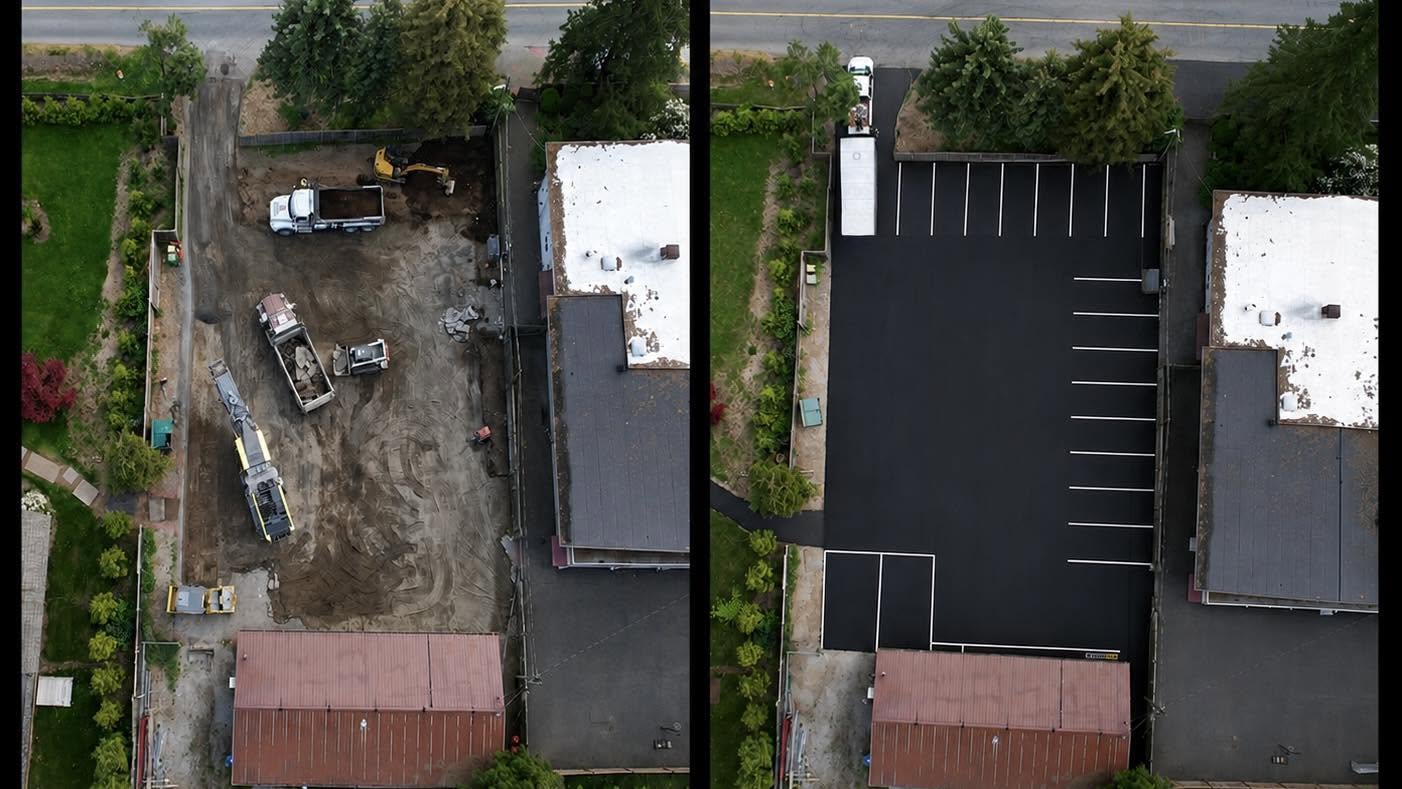
Spoiler alert: Not every faded parking lot needs to be repaved. And not every parking lot can be saved with a bucket of sealcoat.
If you’re a commercial property manager, strata council member, or business owner, you’ve probably looked at your parking lot and wondered:
“Can we just sealcoat it, or is it time to repave?”
It’s a fair question, and one that could save (or cost) you thousands of dollars depending on the answer.
The truth is, sealcoating and repaving are two completely different services. One protects asphalt that’s still in good condition. The other replaces pavement that’s reached the end of its life.
Think of it like painting your house. A fresh coat of paint protects the exterior and keeps it looking great, but it won’t fix rotten wood underneath. If the structure has failed, it needs to be repaired first.
The same principle applies to asphalt.
Key Takeaway
Sealcoating protects asphalt that is still structurally sound. Repaving restores asphalt that has already begun to fail. The right solution depends on the condition of your pavement. Not simply how it looks.
What Is Sealcoating?
Parking lot sealcoating is a protective coating applied over existing asphalt. It acts as a barrier against weather, traffic, and everyday wear, helping extend the life of your pavement.
Sealcoating helps protect asphalt from:
- UV rays and oxidation
- Rain and moisture penetration
- Oil and fuel spills
- Daily vehicle traffic
- Surface deterioration
Think of it like sunscreen for your parking lot. You apply sunscreen before the damage happens, not after you’ve already been badly sunburned.
What Is Repaving?
Repaving is much more than giving asphalt a fresh appearance. It involves replacing worn or damaged pavement so it can continue performing for years to come.
Depending on the condition of the pavement, repaving may include:
- Asphalt milling
- Localized asphalt repairs
- New asphalt installation
- Base reconstruction
- Drainage improvements
Unlike sealcoating, repaving addresses problems beneath the surface, not just what you can see.
When Is Sealcoating the Right Choice?
If your parking lot has good structural integrity, sealcoating may be all it needs.
Sealcoating is usually recommended when:
- The asphalt is structurally sound.
- There are only minor surface cracks.
- Water drains properly.
- The pavement looks faded but remains stable.
Before applying sealcoat, we typically recommend completing crack sealing so water cannot continue entering beneath the asphalt.
When Is Repaving the Better Investment?
Sometimes your parking lot is telling you something.
If you’re seeing:
- Large potholes
- Alligator cracking
- Soft spots
- Standing water
- Numerous failing patches
- Significant settlement
…the problem usually goes much deeper than the surface.
It’s kind of like replacing the carpet when the floor underneath is collapsing. It might look better for a while, but it won’t solve the real problem.
The Biggest Mistake Property Owners Make
One of the most common mistakes we see is using sealcoating to fix pavement that has already structurally failed.
Unfortunately, sealcoat is not a repair product.
It won’t fix potholes, eliminate drainage problems, repair base failure, or stop severe alligator cracking.
In those situations, investing in parking lot paving services or resurfacing usually provides much better long-term value.
Sometimes the Right Answer Is Both
Many commercial properties benefit from a phased maintenance plan.
For example:
- Repair damaged areas.
- Seal existing cracks.
- Correct drainage issues.
- Apply sealcoat over the remaining healthy asphalt.
This approach protects the pavement while delaying larger reconstruction projects.
Don’t Forget About Drainage
Here’s something many property owners overlook: water is usually the real culprit.
If your parking lot has poor drainage, simply repaving over the existing problem may only delay future failures.
That’s why Burnaby Blacktop evaluates:
- Drainage
- Grading
- Water flow
- Base stability
- Traffic patterns
Solving the root cause almost always provides a better return on investment than repeatedly repairing the symptoms.
How Burnaby Blacktop Helps You Decide
Every parking lot is different.
Rather than recommending the same solution for every property, we inspect the condition of your asphalt and explain your options.
Depending on what we find, we may recommend:
- Sealcoating
- Crack sealing
- Pothole repairs
- Asphalt resurfacing
- Asphalt milling
- Complete repaving
Our goal is simple: recommend the solution that provides the best long-term value, not simply the quickest sale.
Not Sure Which Service Your Parking Lot Needs?
Don’t guess. A professional pavement assessment can determine whether sealcoating will protect your investment or whether repaving is the smarter long-term solution.
Frequently Asked Questions
No. Sealcoating protects asphalt but does not repair structural cracks or potholes. Cracks should be sealed or repaired before sealcoating is applied.
If your pavement has widespread cracking, potholes, soft spots, poor drainage, or repeated repairs, it may be time for resurfacing or repaving. A professional inspection is the best way to determine the right solution.
Yes, when applied to asphalt that is still structurally sound. Sealcoating helps protect against UV rays, moisture, oil spills, and oxidation, extending the life of your pavement.
No. Newly paved asphalt needs time to cure before sealcoating. Your contractor can recommend the appropriate timeline based on the pavement and weather conditions.