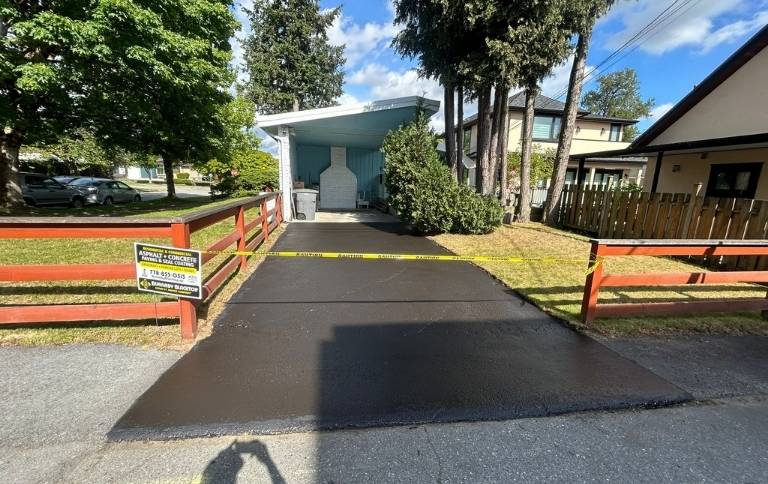
So, you finally got your driveway sealed. It looks amazing, doesn’t it? But now comes the awkward part: when can you actually drive on it without ruining all that fresh work?
The Magic Number: 24 to 48 Hours
In general, most sealed driveways need at least 24 hours before they can handle vehicle traffic. But, and this is important, that’s a best-case scenario.
If the weather is warm, dry, and sunny, 24 hours might do the trick. If it’s a bit cloudy or cooler? Play it safe and wait 48.
Not sure what counts as “cool” in British Columbia terms? Anything under 15°C, especially with overcast skies or humidity, will slow down the drying process. Think of sealcoat like fresh paint. Sealcoat needs time to cure, not just dry to the touch.
Quick Reference Chart
| Conditions | Safe for Walking | Safe for Driving |
|---|---|---|
| Hot & Sunny (20–25 °C) | 4 hours | 24 hours |
| Overcast or Cloudy (15°C) | 6–8 hours | 48 hours |
| Cool & Humid (<12°C) | 10+ hours | 72 hours |
What About Foot Traffic?
You can usually walk on your driveway after 4 to 6 hours, assuming good weather. But be careful.
Avoid high heels, scooters, bikes, dragging garbage bins, or anything that puts sharp pressure on the surface too soon.
Light walking is one thing. Scraping, twisting, or dragging across fresh sealcoat is another.
Do I Really Need to Wait? Why Waiting Matters?
Driving on your sealed driveway too early can do more than leave tire marks. It can damage the protective coating before it has bonded properly.
Before sealcoat cures, vehicle tires can scuff the surface, pull sealer away from the asphalt, leave uneven marks, or reduce the protection in high-traffic areas.
Think of it like walking across a freshly cleaned floor before it dries. One step may not ruin everything, but it can leave marks that are hard to fix later.
Here’s Where Most People Get Wrong
Most people focus only on the clock. They think, “It has been 24 hours, so I’m good.”
But your driveway’s shape and location matter too.
- Your driveway’s shape matters: A flat, straight driveway dries evenly. But curves, slopes, or shaded areas (hello, tree-lined suburbs) may stay tacky longer. If one side faces the sun and the other hugs a hedge, don’t expect even results.
- Curing takes longer than drying: Even if the surface feels dry after 24 hours, the full curing process can take up to 30 days. So go easy—avoid tight turns, heavy trucks, and parking in the exact same spot every day for the first week or two.
- Humidity’s a sneaky villain: British Columbia isn’t exactly famous for dry air. Even if it’s not raining, high humidity can keep that sealcoat sticky. If you see dew in the morning, wait a bit longer.
But before we let you go
What Happens If You Drive on It Too Soon?
If you drive on fresh sealcoat too early, you may notice tire marks, scuffing, peeling, or dull patches. In some cases, the sealer can lift or twist where tires turn sharply.
The damage may look cosmetic at first, but it can reduce how well the sealcoat protects the asphalt. That means the surface may become more vulnerable to water, UV exposure, oil stains, and everyday wear.
If you accidentally drive on it too soon, do not panic. Avoid more traffic and call your paving contractor for advice.
Curing Takes Longer Than Drying
This is important: drying and curing are not the same thing.
Your driveway may feel dry after 24 hours, but the full curing process can take much longer. In many cases, sealcoat continues to cure for up to 30 days.
During the first week or two, go easy on the surface. Avoid tight turns, heavy trucks, trailers, RVs, and parking in the exact same spot every day.
Vancouver Weather Makes a Difference
Many online answers are written for dry, hot climates. Vancouver is different.
In the Lower Mainland, sealcoat drying can be affected by:
- morning fog,
- shaded driveways,
- cooler evenings,
- humidity,
- tree cover,
- nearby hedges,
- and sudden weather changes.
West Vancouver fog, the New Westminster shade, or a tree-lined driveway in Port Coquitlam can all change the drying timeline.
A good paving company will always give you recommendations based on actual site conditions, not just a generic rule.
What Not to Do After Sealcoating
Here are the biggest mistakes people make after sealcoating:
- Do not drive on it too early.
- Do not turn your wheels while parked.
- Do not park heavy vehicles on it right away.
- Do not drag garbage bins or sharp objects across it.
- Do not wash it too early.
- Do not pressure wash it for at least a few weeks.
- Do not assume shaded areas are ready just because sunny areas look dry.
Turning your wheels while parked is one of the fastest ways to leave scuff marks. Even after the surface is safe to drive on, try to keep the vehicle moving slightly while turning.
Can Delivery Trucks or Garbage Trucks Drive on It?
Heavy vehicles should be kept off freshly sealed driveways longer than regular passenger vehicles.
Garbage trucks, delivery trucks, moving vans, trailers, and RVs place more pressure on the surface. If possible, wait several days before allowing heavy vehicles onto the driveway.
If you know a garbage pickup or delivery is coming, keep bins near the street and avoid having large vehicles pull onto the sealed area.
Can You Park Overnight After Sealcoating?
Usually, yes, but only after the surface is safe for driving.
If the weather was warm and dry, this may be after 24 hours. If conditions were cooler, shaded, or humid, wait 48 to 72 hours.
Even then, avoid parking in the exact same spot for long periods during the first week if possible.
Can You Wash a Newly Sealed Driveway?
No. Do not wash it too early.
Wait at least a full week before hosing it down, and avoid pressure washing for several weeks. Sealcoat needs time to cure and bond properly.
If dirt, leaves, or debris land on the surface, gently remove them once the driveway is safe to walk on.
Common Myths About Sealed Driveways
- “If it feels dry, it is ready.”
Not always. The surface can feel dry while the coating is still curing underneath.
- “Hot weather always means 24 hours.”
Not necessarily. Shade, humidity, and airflow still matter.
- “Driving slowly won’t hurt it.”
Even slow-moving vehicles can leave marks if the surface has not cured enough.
- “Sealcoating fixes everything.”
Sealcoating protects asphalt, but it does not fix deep cracks, potholes, or drainage problems. Those issues should be repaired before sealing.
Expert Tip from An Experienced Paving Company in Vancouver
If part of your driveway gets afternoon sun but another section stays shaded by trees or your home, check the shadiest section before driving on it.
That cooler area is usually the last part to cure.
When in doubt, wait longer. A little extra patience can protect the look and performance of your new sealcoat.
Burnaby Blacktop’s Sealcoating: We’ve Got You Covered (Literally)
At Burnaby Blacktop, we don’t just show up, seal your driveway, and disappear. Our sealcoating services are backed by experience, care, and real conversations with real homeowners—because let’s face it, asphalt can be confusing.
We’ll walk you through:
- How long to wait before walking or driving
- What to avoid during the first few days
- When to consider reapplying in the future
And we won’t just toss instructions at you and hope for the best. Our crew will give you clear guidance before we leave, plus friendly reminders if rain’s on the horizon or if your unique surface needs extra drying time. We’re also happy to answer your “just checking…” calls if you’re unsure when it’s safe to drive.
So if you’re worried about messing up your new sealcoat with one too-early tire turn, don’t be. We’ll make sure you know exactly what to do (and what not to do) after we finish the job.
Not Sure If Your Driveway Is Ready?
Have questions about your newly sealed driveway or are thinking about sealcoating services? Contact us today. We are here to help you protect your investment.