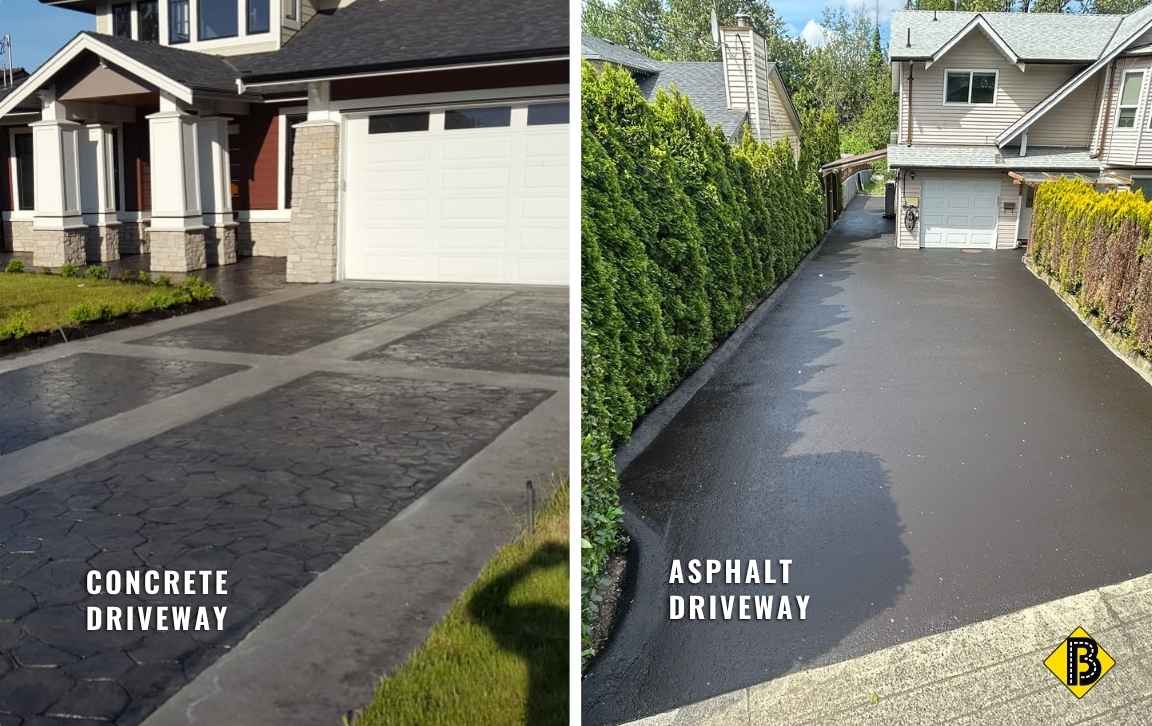
If you’re planning a new driveway in Vancouver, one of the first decisions you’ll face is:
Should you choose asphalt or concrete?
Both are excellent options. Both can last for decades. And both are widely used across the Lower Mainland.
The real difference comes down to cost, performance, and how each material fits your specific needs.
Let’s break it down clearly and practically.
Upfront Cost: What Can You Expect to Invest?
In the Greater Vancouver area, asphalt and concrete fall into different price ranges right from the start.
- Asphalt driveways can typically range between $3 – $18+ per square foot
- Concrete driveways usually come in at $12 – $25+ per square foot
For a standard residential driveway, that difference can represent a noticeable change in total project cost.
For some homeowners, asphalt aligns well with budget-conscious projects. For others, concrete’s higher upfront investment fits into longer-term property
plans, especially when design and finish are a priority.
Understanding Long-Term Costs
Beyond installation, it helps to think about how each surface is maintained over time.
Asphalt is designed to be maintained gradually. Periodic sealcoating and minor repairs help preserve its performance and appearance. These maintenance steps
are typically straightforward and allow costs to be spread out over time.
Concrete generally requires less frequent maintenance. Its surface holds up well and maintains a consistent appearance for years. When maintenance is
needed, it’s often more localized rather than ongoing.
Both approaches offer value; it simply depends on whether you prefer ongoing maintenance over time or less frequent intervention.
Concrete Finishes: A Key Difference in Design
One area where concrete really stands out is in its range of finishes.
Unlike asphalt, which has a consistent black surface, concrete offers several design options that can enhance the overall look of your property.
Some of the most common finishes include:
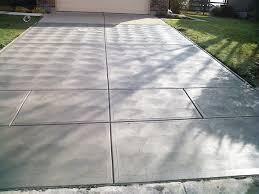
1.Broom finish: A classic, slightly textured surface that provides traction and a clean look
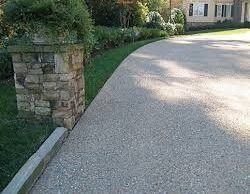
2. Exposed aggregate: Decorative stones are revealed on the surface, creating a high-end, textured appearance
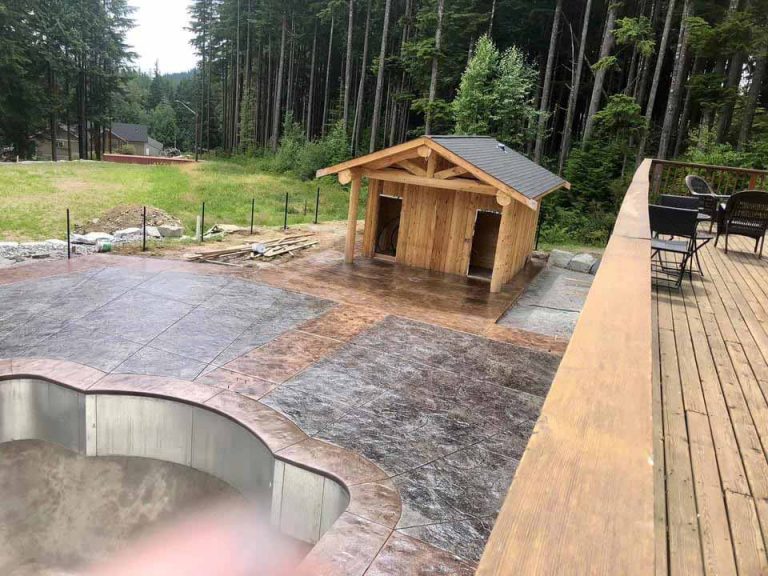
3.Stamped concrete: Designed to mimic patterns like stone, brick, or pavers
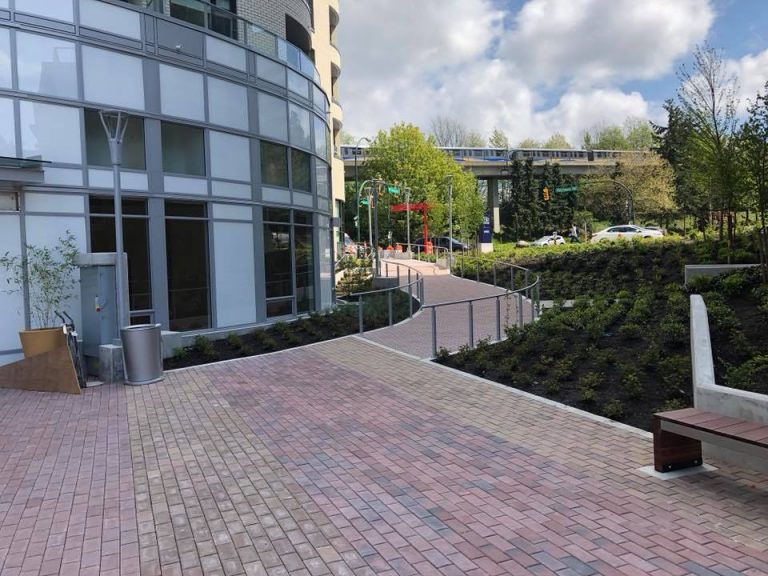
4. Colored concrete: Pigments can be added to achieve different tones and styles
These options make concrete a popular choice for homeowners who want their driveway to complement landscaping or architectural design.
Performance in Vancouver’s Climate
In Vancouver, weather plays a major role in how driveways perform.
With frequent rain, moisture, and seasonal temperature changes, surfaces need to handle ongoing environmental stress.
Asphalt is flexible, allowing it to adjust to slight ground movement and temperature shifts. This flexibility can be beneficial in areas where soil
conditions and moisture create movement over time.
With proper installation, asphalt driveways typically last 15–25 years or more
Concrete offers a strong, rigid surface that many homeowners value for its durability and clean appearance. When installed on a properly prepared base with
effective drainage, it can achieve a similar or longer lifespan.
In both cases, long-term performance depends heavily on how well the driveway is built to suit local conditions.
The Role of Base Preparation and Drainage
No matter which material you choose, the most important factor is what’s beneath the surface.
A properly prepared base and effective drainage system are essential in the Lower Mainland. Without them, water can accumulate and lead to shifting or
surface wear over time.
That’s why every successful project starts with evaluating site conditions and ensuring water is properly managed. You can learn more about this on our
drainage installation services.
How to Decide What’s Right for You
Instead of thinking about which material is better, it’s more helpful to think about how each one fits your needs.
Asphalt is commonly chosen for its cost efficiency, flexibility, and ability to perform well in Vancouver’s climate.
Concrete is often selected when homeowners are looking for a specific visual finish or want to incorporate design elements into their driveway.
So the decision becomes less about comparing materials and more about choosing what works best for your property, budget, and long-term plans.