If you’re budgeting for commercial or strata snow removal in Vancouver this winter, you probably want a straightforward answer:
How much is snow removal going to cost?
The problem is that there isn’t one meaningful flat rate we can give you without knowing the property.
Key Takeaway
Your price can depend on the size and layout of the site, service requirements, snow accumulation, ice-management needs, equipment requirements and contract structure.
A small commercial lot with straightforward access is very different from a large strata complex with underground parkade entrances, sidewalks, loading areas and multiple areas where ice can develop.
At Burnaby Blacktop, we price snow and ice management based on the actual requirements of your property. Here are the factors that can make the biggest difference to your 2026 winter budget.
1. Your Property Size Is Only the Starting Point
Square footage matters, but it doesn’t tell us everything.
Two parking lots of approximately the same size can require very different amounts of work.
When our team assesses your property, we also need to consider:
- Parking configuration
- Curbs and islands
- Loading areas
- Sidewalks and pedestrian routes
- Slopes and ramps
- Parkade entrances
- Snow storage areas
- Obstacles and tight equipment access
An open commercial parking lot can often be serviced much more efficiently than a property with numerous obstacles and areas requiring smaller equipment or additional attention.
That’s why we prefer to assess your property before winter rather than trying to determine your snow removal needs during the first storm. And this is exactly why, pre-booking is important.
2. How Much Snow Falls?
Naturally, the amount of snow matters. A light snowfall doesn’t require the same response as a significant accumulation.
But in Vancouver, snow depth isn’t the whole story.
Wet snow, falling temperatures and repeated freeze-thaw conditions can create challenging surfaces even when snowfall totals don’t look particularly dramatic.
That’s where snow removal and ice management start becoming two different parts of the same winter maintenance plan.
3. Your Service Trigger Can Affect Pricing
One question you should ask when comparing snow removal proposals is:
When does service actually begin?
Your contract may establish specific service triggers or requirements based on accumulation or site conditions.
The right approach depends on how your property operates.
A commercial site that needs reliable early-morning access may have different priorities from a property with limited overnight traffic.
A strata property may need particular attention around entrances, sidewalks, ramps and other pedestrian areas.
This is why the cheapest-looking proposal isn’t necessarily the easiest one to compare. You need to understand what service you’re actually receiving and when crews are expected to respond.
4. Snow Plowing Isn’t the Same as Ice Management
This is one of the most important distinctions to understand when budgeting.
Moving accumulated snow is one job. Managing icy surfaces is another.
Depending on the conditions and your service plan, winter maintenance may involve salting or other ice-control measures in addition to mechanical snow removal.
Areas such as slopes, entrances, pedestrian routes and frequently travelled sections of a property can require particular attention when temperatures fall.
And in Vancouver, this matters because property owners and occupants have specific responsibilities for adjacent sidewalks.
The City of Vancouver currently requires snow and ice to be removed from the full width of sidewalks adjacent to a property by 10 a.m. each day when snow or freezing conditions apply.
Current City standards also require owners to clear snow and ice from improved accessible parking stalls and provide a cleared 1.5-metre walkway from the building to those stalls by 10 a.m.
If you’re managing a Vancouver property, those areas should be part of your winter planning, not an afterthought once snow starts falling.
5. Equipment Requirements Affect the Job
You wouldn’t use the same equipment everywhere.
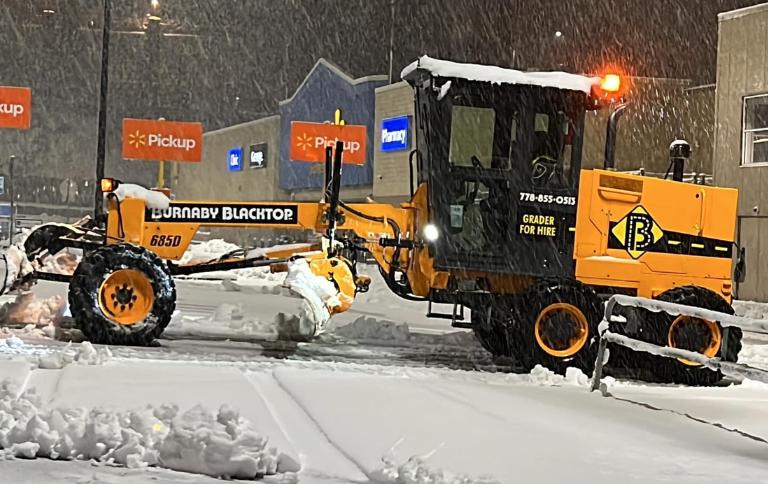
Large, open areas may allow larger equipment to work efficiently, while confined areas, sidewalks or complex properties may require different equipment and additional labour.
Access matters too.
Can equipment move easily through the property? Are parked vehicles likely to restrict operations? Are there narrow lanes?
Where can snow safely be placed without blocking parking stalls, visibility, drainage or access?
These are exactly the details we want to identify before winter arrives.
6. Snow Storage Can Become a Bigger Issue Than You Expect
Where are you going to put the snow?
It’s an easy question to overlook in September.
It’s much harder to answer when a parking lot is already covered.
Plowed snow needs somewhere to go. On properties with limited space, poorly planned snow piles can interfere with parking, pedestrian visibility, loading areas and drainage.
Then temperatures rise. Snow melts. Then temperatures drop again.
Now that meltwater can become an ice-management issue.
Planning designated snow storage areas before the season helps us service your property more effectively when winter weather arrives.
7. The Type of Snow Removal Contract Matters
Your contract structure also affects how you budget for winter service.
Depending on the property and service arrangement, pricing may be structured around individual events, seasonal service or another agreed service model.
Each approach handles cost and weather variability differently.
Instead of asking only: “Which contract is cheapest?”
Ask: “What exactly is included?”
Look at service triggers, snow removal, ice management, areas covered, response expectations and any additional services.
That’s a much better way to compare proposals.
Why September Is the Right Time to Think About Snow
Snow removal is one of those services everyone remembers at exactly the same time: when snow appears in the forecast.
That’s not when you want to start figuring out how a contractor will access your property, where snow should be stored or which areas need priority treatment.
Booking early gives us time to assess your site, understand its challenges and develop a snow and ice management plan before the first winter event.
It also gives property managers time to understand the scope and budget appropriately.
If you’re wondering whether professional service makes sense for your property, we’ve also covered the advantages of using a professional snow removal service.
So, How Much Will Snow Removal Cost Your Property in 2026?
The most accurate answer comes from assessing the property itself.
That’s why we don’t believe in giving you a generic number that may have very little to do with your actual property.
We’d rather look at what you need and build the service around it.
Plan Your 2026–2027 Winter Snow Removal Now
If you manage a commercial, strata, industrial or multi-residential property in Vancouver or the Lower Mainland, now is the time to get your winter plan in place.
We’ll assess your site, discuss your service requirements and prepare a customized estimate so you know what to expect before winter weather arrives.
Don’t wait until there’s snow in the forecast.